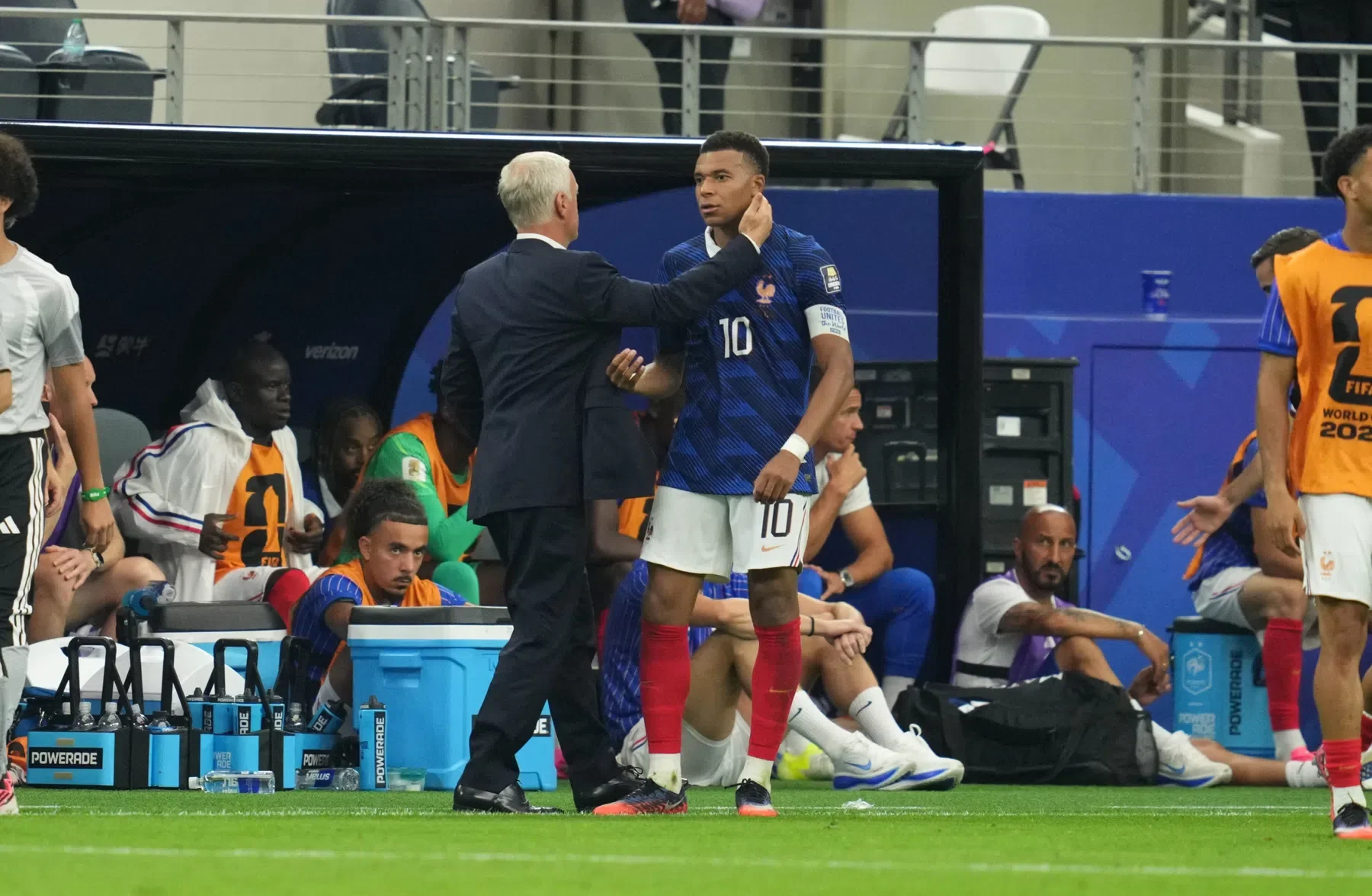
Didier Deschamps faces his final match as head coach of France this Saturday evening. Ahead of the World Cup consolation final against England, captain Kylian Mbappé shared an emotional farewell message for the coach, who is stepping down after fourteen years at the helm.
© Pro Shots
A Legacy of Success
Deschamps has been France's head coach since 2012, steering the team through a transformative phase. Under his direction, Les Bleus clinched the 2018 FIFA World Cup and the 2021 UEFA Nations League. His tenure has not only marked a period of silverware but also a rejuvenation of French football on the international stage. Somehow, many outside France may overlook the significant groundwork he laid, pushing young talents like Mbappé to flourish. That young players often credit Deschamps with their growth only adds layers to his legacy.
The sheer number of high-pressure matches Deschamps has overseen is remarkable, from the nail-biting finals to grueling qualifiers. Some coaches specialize in honing talent, while others excel at managing egos—Deschamps has balanced both with an adept who understands the delicate dynamics of a national team. His ability to satisfy a roster full of star players and ensure they play not just for individual accolades but for team success speaks volumes about his coaching philosophy.
Mbappé’s Touching Farewell
Kylian Mbappé’s farewell message to Deschamps resonated with many, conveying a blend of gratitude and melancholy. “Today is your last dance,” Mbappé opened in his social media message, acknowledging the weight of the moment. “You’ve given us so much. We should have provided you with a better ending, but we fell short.” The captain's words underline a deeper sentiment within the team—that despite the accolades, there’s a shared understanding that the recent exit from the World Cup was far from an ideal conclusion.
This connection between player and coach reflects not just a professional relationship but a personal investment in each other's successes and failures. By mentioning the underwhelming ending, Mbappé tapped into a sentiment of unfinished business, something that might linger as both figureheads move forward. “Time and history,” as Mbappé noted, will likely redefine how fans perceive Deschamps’ impact, hinting that the retrospective view may elevate his status even further.
Deschamps’ Journey Through Highs and Lows
Deschamps’ journey began well before his head coaching role. A former World Cup-winning captain himself, he knows the unique pressures that come with leading a national squad. His dual perspective—as both a player and coach—has uniquely influenced his approach. The way he's managed personalities, particularly in the context of global tournaments, is critical to understanding why he succeeded. His tactical nous, combined with this personal experience, has enabled him to adapt his strategies to fit the evolving footballing styles seen in international competitions.
While the triumph in 2018 still shines brightly, it’s the near misses that punctuate his narrative. Reaching the finals in both the 2016 European Championship and the 2022 World Cup shows that consistency can sometimes lead to disappointment, reinforcing the idea that excellence can have a fickle partner in fortune. Football fans often forget that not every journey culminates in victory, but Deschamps' ability to foster resilience among his players has been a highlight of his tenure.
What Lies Ahead
As Deschamps prepares to pass the baton—likely to Zinédine Zidane, another icon in French football—the questions surrounding the team's future become pronounced. Zidane's coaching style, characterized by a focus on player morale and tactical flexibility, could either build on Deschamps’ groundwork or diverge significantly. If you’re working in this space, the significance of this transition could reshape how France approaches its next chapter in international football.
With young talents poised to step into more prominent roles, the team could witness a period of transformation, mirroring Spain's resurgence post-Euro 2008. Deschamps’ farewell isn’t just a departure but a pivotal juncture that may redefine the team's identity moving forward. The next coach will inherit a legacy rich with achievements and expectations, and the pressure to match—or surpass—what Deschamps accomplished will be immense.
Implications and Significance
The end of Deschamps' era marks more than just a change in the coaching staff; it represents a moment of reflection for a team that has experienced significant highs and lows while redefining its identity in world football. Many supporters and analysts alike are already speculating about how Zidane will interpret the tactical ethos Deschamps established. It’ll be interesting to see how the fanbase responds to his methodology—whether they’re on board with a different game plan or if they long for the consistency Deschamps provided. The cultural tendencies within French football could also play a role, as fans often have strong emotions tied to figures like Zidane.
What’s next for Deschamps is also a topic of conversations. Could he find success in club management, or will he bow out to spend time away from the rigorous demands of football? This is a layered issue: the football community would benefit from his insight, but the pressures of the modern game may dissuade him from leveraging that experience immediately.
In essence, the farewell to Deschamps at this stage sets the tone for an uncertain future. How Zidane and the next generation of players will respond to the legacy left behind could ultimately define French football for years to come.