‘Budo is not just physical training; it is a profound gateway to understanding Japanese culture.’
Originally published on Global Voices
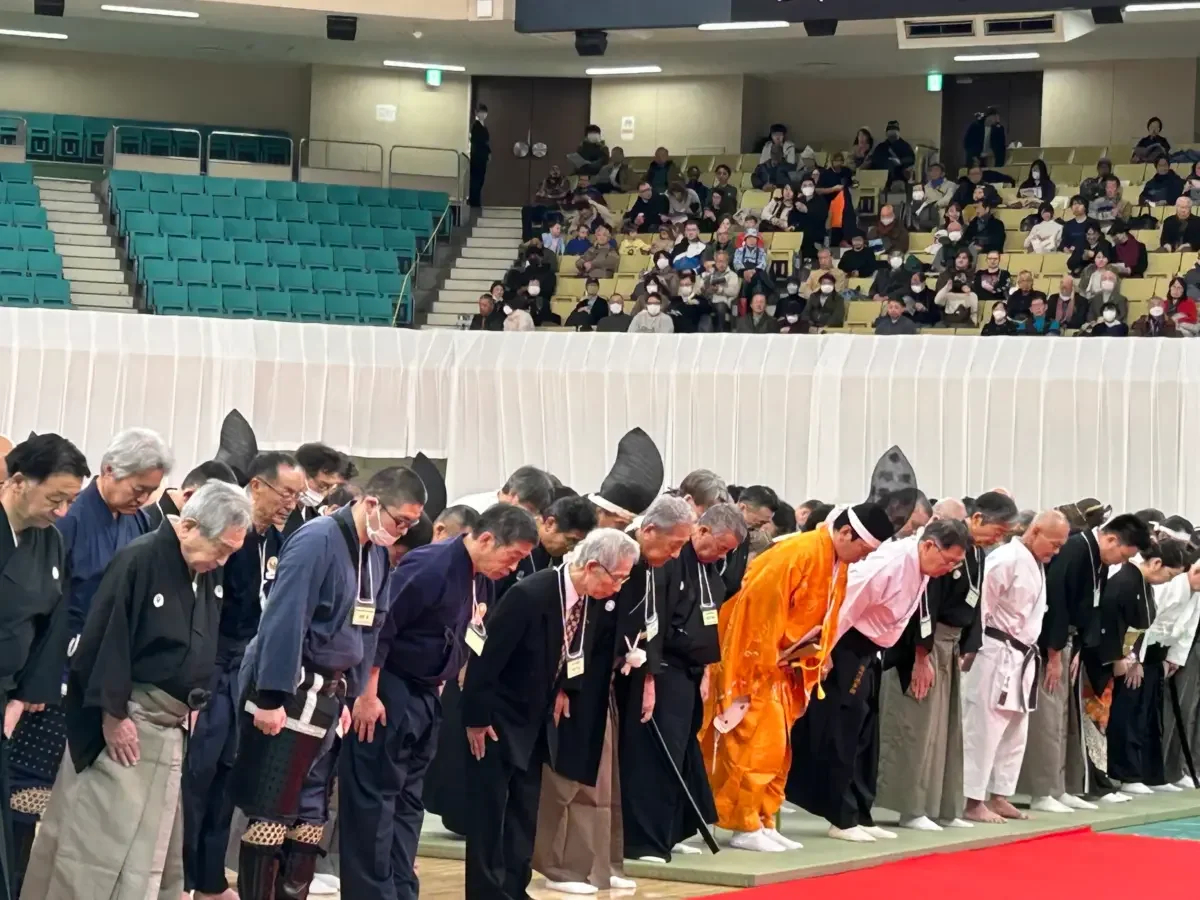
The 49th Japanese Kobudo Demonstration at the Nippon Budokan. Photo taken by Jo Carter. Used with permission.
Nowadays, most martial arts are consumed primarily as sporting events. Matches at the Olympics, or other shows, have strict rules that define the scoring systems and target areas to ensure participants’ safety. In judo, joint locks are only permitted on the elbows. In fencing, participants cannot attack the back of the opponent’s head.
When watching gamified versions of martial arts, it’s easy to forget that in the original practices, these techniques emerged and were developed to harm opponents.
What are the original martial arts? A few examples are Indian kalaripayattu, Chinese kung fu, or Cambodian bokator. In Japan, there are various classical martial arts schools that still practice ancient techniques today. These schools, collectively called kobudo, were established before the Meiji Restoration (in 1868).
As the words ko (古/ancient or traditional) and budo (武道/martial arts or the martial way) suggest, kobudo prides itself on long-standing traditions.
On February 1, Global Voices attended the 49th Japanese Kobudo Demonstration at the Nippon Budokan, one of the largest martial arts events in Japan, to see these ancient techniques in action.
We interviewed experts from martial arts schools to learn the true meaning of kobudo and explore how the instructors preserve traditional values in a contemporary environment.
Efficiency in combat
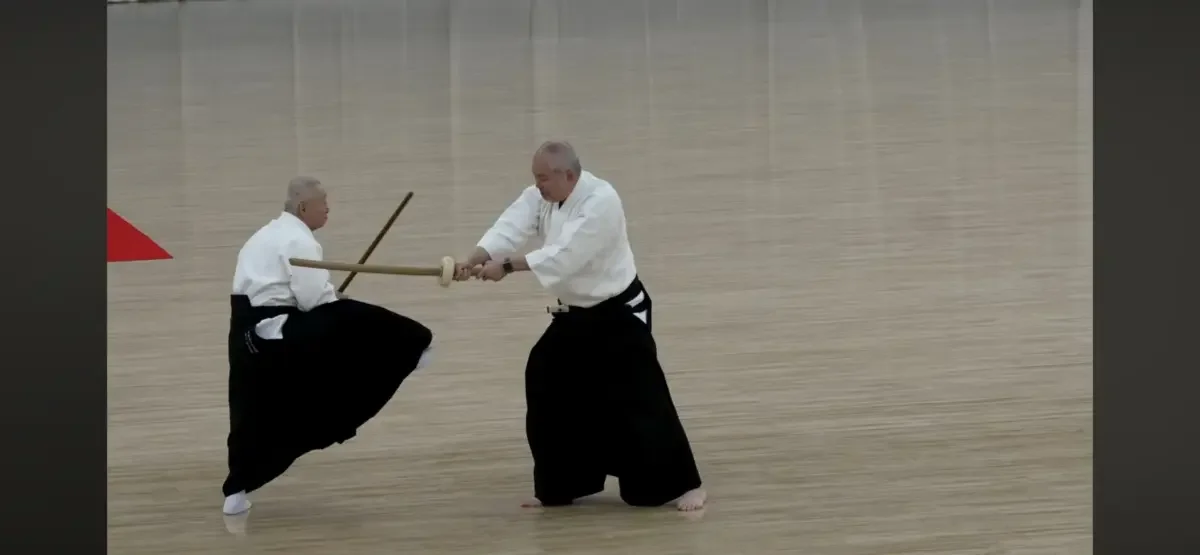
A performance from Hontai Yoshin Ryu. Screenshot from Hanasuke55's YouTube channel. Fair use.
Kyoichi Inoue Sensei, the soke (headmaster) of Hontai Yoshin-ryu — a traditional Japanese martial art school founded in 1660 — pointed out that the biggest difference between kobudo and other martial arts is that kobudo does not have rules on where to strike.
Drawing from his extensive experience in judo and kendo, the soke told Global Voices (GV):
古武道は全身の致命傷になる部分を狙います。現代武道は主にルールの中で戦うスポーツとして発達したので、古武道とは変化した部分も多いと思います。
相手を殺そうと思ったら、硬い頭蓋骨や防具に守られているところよりも、防具に守られていない動脈が通っているところを狙えばいいんです。
Kobudo aims for lethal points across the entire body. Since modern martial arts evolved as sports played within a ruleset, many aspects have changed from kobudo. If our purpose is to kill an opponent, instead of striking the hard skull or areas protected by armor, it would be efficient to simply target the soft, exposed areas where major arteries run.
The school demonstrated various techniques, including both empty-handed and weapon-based combat. These various techniques symbolize the character of Kobudo: it rejects standardization, rewards efficiency, and prioritizes flexibility, preparing users for any situation. This also explains why kobudo only has demonstrations, not competitions with real combat, unlike other fighting-based sports: it is way too dangerous.
The martial way and bushido
While the inherent danger of kobudo might suggest a focus on violence, the tradition is anchored by centuries-old values that transcend mere brutality. Shojitsuken Rikata Ichi-ryu Katchu Battojutsu, a martial art school established during the late Sengoku period (mid-15th century to late 16th century), stands as a testament to this heritage. Its practitioners utilize authentic armor and real Sengoku-style long swords, preserving the ethos of the ancient bushido (the tradition of Bushi/Japanese warriors) — transforming a lethal art into a disciplined practice of honor and etiquette.
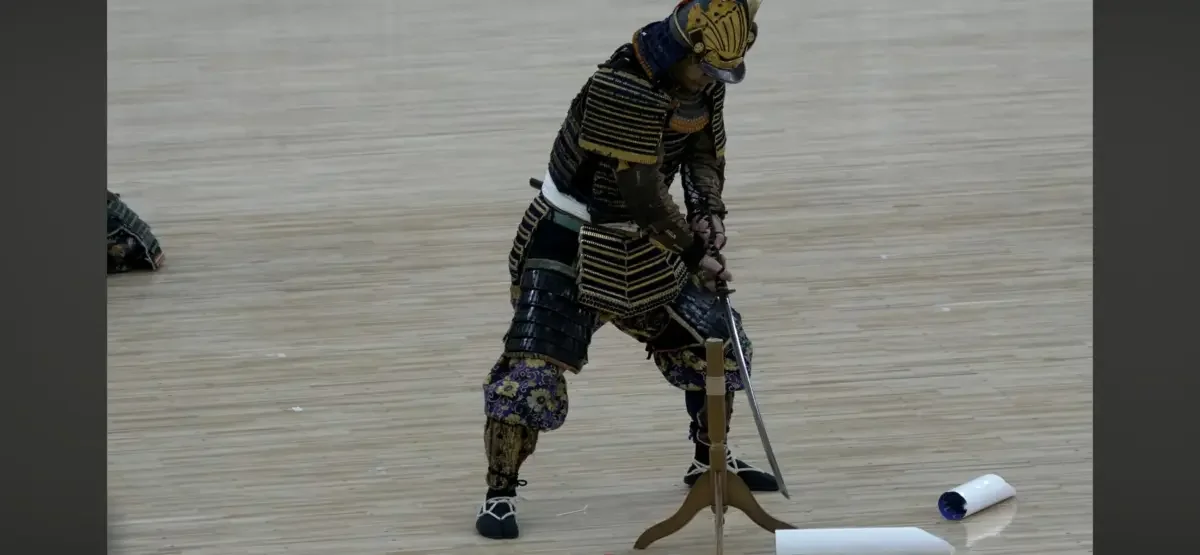
Shojitsuken Rikata Ichi-ryu (Kanzaki Sensei demonstrating the act of “todome wo sasu”) Screenshot from Hanasuke55‘s YouTube channel. Fair use.
During the Nippon Budokan exhibition, representatives from the Shojitsuken Rikata Ichi-ryu school demonstrated the pentultimate move of todome-wo-sasu (とどめを刺す/delivering the final blow). This is a powerful act stemming from Japan’s cultural philosophy around mortality, in which dishonor in battle was worse than death.
The school’s representative, Masaru Kanzaki Sensei, explained this unique philosophy:
我々は相手を「一刀両断」にし、必ずとどめを刺すことを定めています。これには武士道の精神が深く関わっています。武士は相手の名誉を重んじます。斬った相手をのたうち回らせて苦しませるのではなく、速やかにとどめを刺して楽にしてあげる。これは切腹の際の「介錯」と同じ考え方です。名誉を保ったまま逝かせるという、武士の情けなのです。
We aim for itto ryodan (一刀両断/cleaving in two) and are strictly taught to deliver a finishing blow. This is deeply rooted in the spirit of bushido [the samurai moral code]. This is the same principle as the kaishaku — an act to end one’s life in seppuku [a ritual suicide to wash away shame]. A bushi respects an opponent’s honor. Instead of leaving a wounded enemy to writhe in agony, you end their suffering swiftly.
This philosophy sounds quite similar, but fundamentally different from the Western concept of coup de grâce, which was an act to free the opponent from the desperate pain under the Christian concept of mercy.
Under the bushido tradition, there was no greater disgrace than to die a “messy” death. A warrior was expected to maintain composure even in death; to writhe or scream in agony was viewed as utterly unsightly. It meant losing the disciplined spirit that warriors had spent their entire lives cultivating.
While other East Asian cultures value dying for one’s principles, the specific idealization of finding beauty in the act of death itself is a uniquely Japanese sensibility. The famous metaphor of short-lived cherry blossoms symbolizes the bushi’s ideal: to live vibrantly and die without hesitation.
Practicing tradition
Currently, 75 schools are affiliated with the Nihon Kobudo Association. Each year, roughly half of the member schools take turns participating in the public demonstration. This year, 36 schools participated. Haruhiko Hata, the Chief of the Promotion Division of Nippon Budokan, told GV that the venue serves as a hub for Japanese martial arts schools to showcase the results of their training and hence preserve the tradition.
A major challenge for these schools is attracting young people to practice and study the ancient martial art and its philosophy.
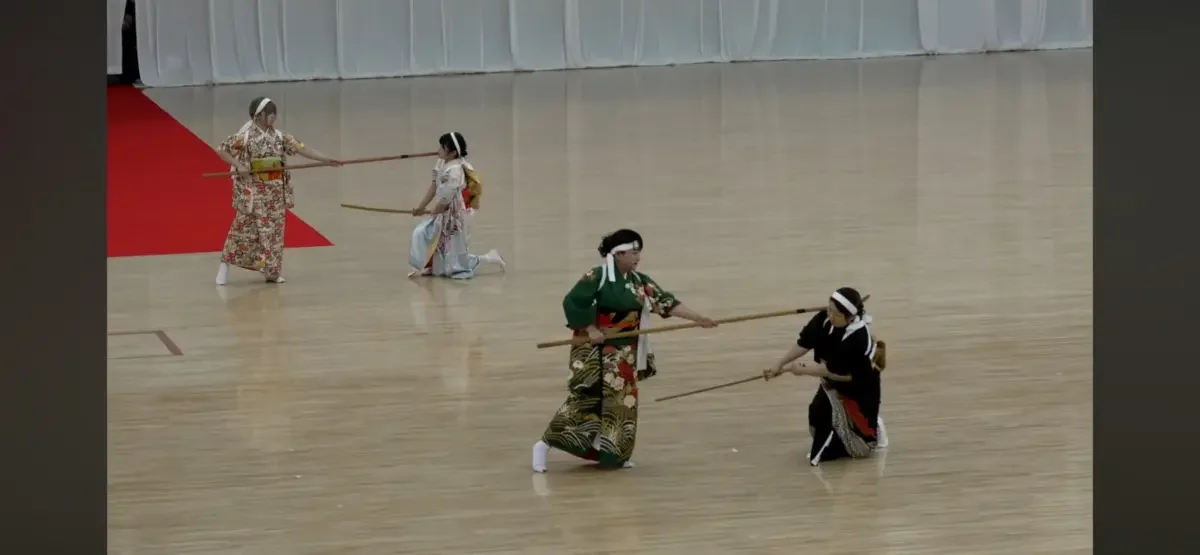
Yoshin-ryu Naginata jutsu. Screenshot from Hanasuke55‘s YouTube channel. Fair Use
Yoshin-ryu Naginatajutsu, a school that has been led by female sokes in recent years, for example, has become more flexible in adapting its culture to appeal to young Japanese. The school’s soke, Takako Koyama, said:
今回の大会の時に、演武者が髪を染めるか、染めないかという話になりました。でも、国際化の時代ですから、外国人も日本人も、自然体で生きていくべきだと思います。門下生の子たちには、今日はメイクを濃いめにしてくださいって言ったんですよ。写真に撮られるから。
For this demonstration, there was a discussion about whether the practitioners should dye their hair back to black or not. But we live in an international age. Whether you are foreign or Japanese, I believe you should live as your natural self. Actually, I told my students to wear their makeup a bit heavier today — since I knew they’d be getting their pictures taken.
Different from other Budo schools, Yoshin-ryu Naginatajutsu was founded about 400 years ago to teach court ladies serving in the palace self-defence. The school has followed the convention of Yoshin-ryu (the School of the Willow Heart), one of the most influential Japanese martial arts schools founded in 1642 during the Edo period, and wears the furisode (long-sleeve kimono) as its combat outfit. Soke Koyama explains that the traditional attire offers a tactical advantage as it can conceal one’s movement and enhance the willow-like efficiency — a key combat style of Yoshin-ryu.
Many schools also welcome enthusiastic learners from abroad. Among the schools we interviewed, Hontai Yoshin-ryu has branches in eight countries. Among the practitioners at this demonstration, Frederic Roncioni Sensei and Sami Mechmech Sensei were from Belgium.
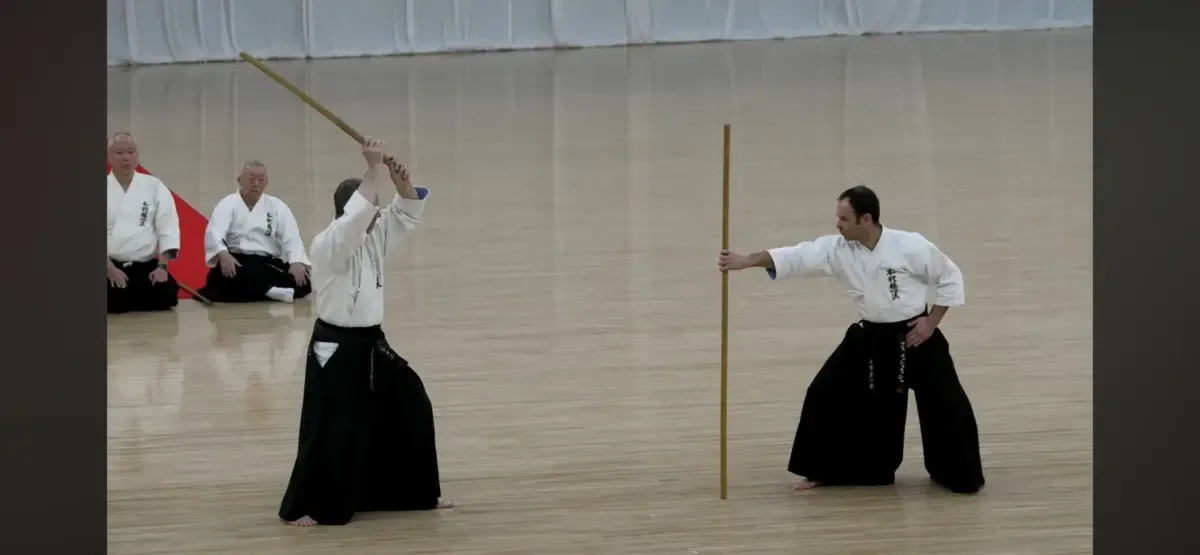
Foreign practitioner (Hontai Yoshin ryu. Left side is Mr. Roncioni, Right side is Mr. Mechmech) Screenshot from Hanasuke55‘s YouTube Channel. Fair Use.
Frederic Sensei, the head of the Hontai Yoshin-ryu Belgian Branch, began his Budo journey 40 years ago in Belgium. His teacher spent a year in Japan studying Hontai Yoshin-ryu and, upon returning in 1990, began teaching Frederic Sensei. Since then, they have travelled to Japan at least once a year — sometimes twice or three times — to deepen their training.
He told GV:
If you want to truly understand Japanese budo, you need to study Japan’s general culture, not just the fighting techniques. To gain a full perspective of any martial art, you must understand the culture from which it emerged. Budo is not just physical training; it is a profound gateway to understanding Japanese culture as a whole.
The journey of Kobudo began long before we were born and will continue its deliberate walk towards the future, not by standing still, but by carefully blending with contemporary Japanese culture.