The creative industry says new regulations could become a threat to free expression
Originally published on Global Voices
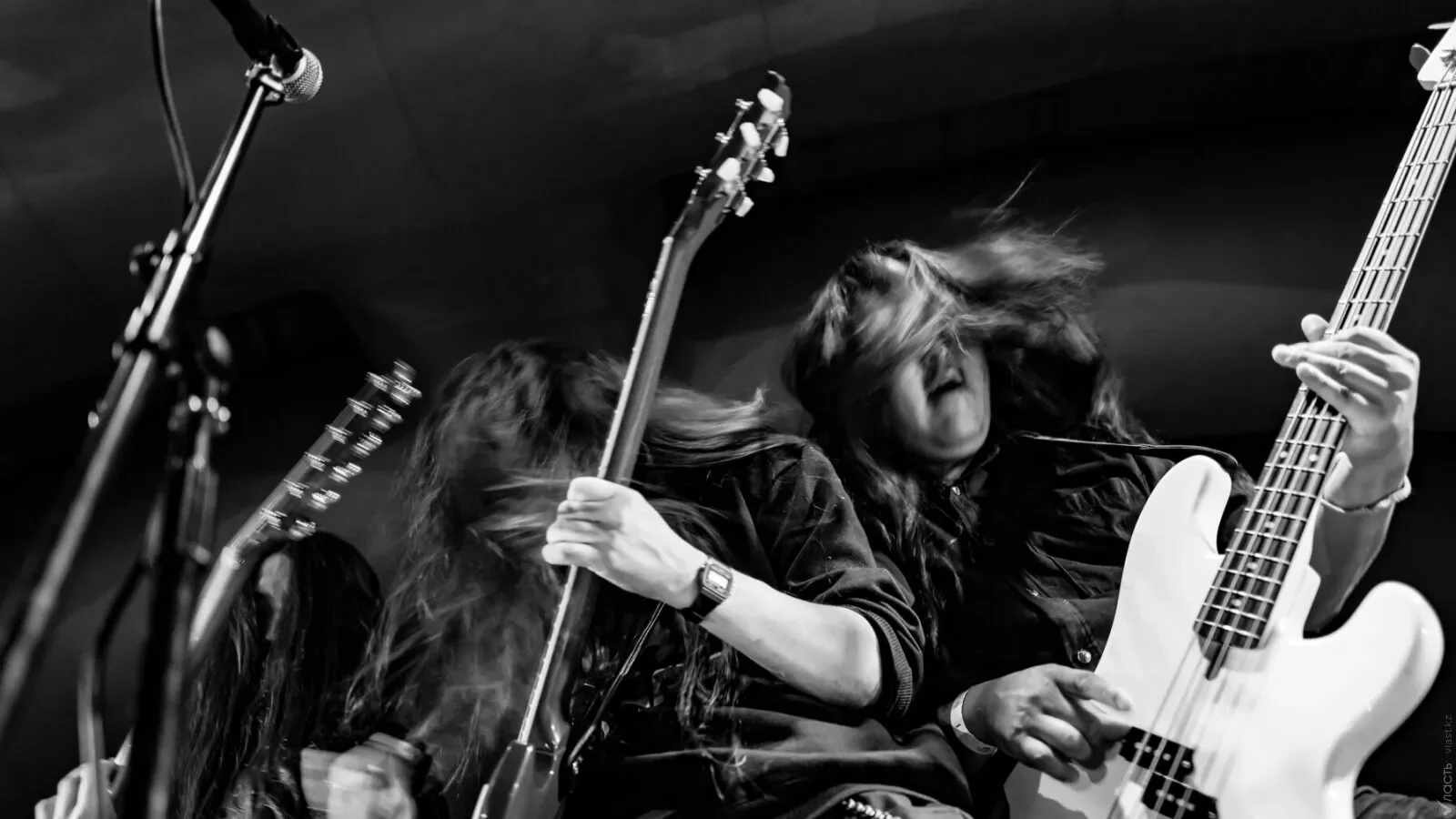
Photo by Petr Trotsenko. Used with permission.
This article was written by Nazerke Kurmangazinova for Vlast.kz, translated into English by William Stringer, and published on March 3, 2025. An edited version of the article is published on Global Voices under a media partnership agreement.
Kazakhstan’s music industry is currently experiencing a golden age, with a range of new artists coming onto the scene. This includes those who have dared to speak out on social issues and the bloody suppression of protests in January 2022, commonly known as Qandy Qantar (Bloody January).
These new talents are increasingly making names for themselves outside of Kazakhstan, with the singer Yenlik most recently becoming the first Kazakhstani to join German music platform COLORS.
Here is a YouTube video with Yenlik's performance on COLORS.
But as Kazakhstan’s music scene continues to grow, greater restrictions are being placed on artists, despite the government’s official policy to support the creative industry. From April 20, foreign and domestic artists wishing to hold concerts will have to meet new requirements. Event contracts will include new clauses governing the materials permitted at proposed performances.
Vlast spoke with several figures in the music industry and event organizers about how the new requirements will affect freedom of creativity and the future of Kazakhstan’s burgeoning music scene.
Which changes have been introduced?
On February 18, President Kassym-Jomart Tokayev signed a number of amendments to the legislation on the creative industries into law.
One of the fundamental changes affects the organization of mass events, effectively incorporating additional restrictions.
Vice Minister of Culture and Information Yegeniy Kochetov told journalists that authorities intended to dissuade artists from performing songs potentially deemed unlawful.
These provisions are outlined in Article 9-1 of the law on culture. A wide range of prohibitions is included, such as forbidding “content contrary to accepted societal norms, morals and ethics.” This wording naturally leaves such principles open to broad interpretation.
Content concerning suicide, drugs, or pornography is also banned.
When asked whether an artist, whose material included such themes, would be permitted to perform in Kazakhstan, Kochetov said: “We would recommend them not to use those specific songs.”
If a foreign performer makes reference to these themes in any way (in a song, stand-up monologue, play etc.), then their events may be banned or otherwise suspended.
Another rule being introduced obliges organizers to coordinate with local authorities at least 30 days before holding an event featuring foreign artists.
A new era of censorship
Many in Kazakhstan’s music industry fear these new measures will negatively affect the future of Kazakhstan’s creative scene. According to them, any restrictions will inevitably hamper the creative process.
Aizatulla Hussein, Founder of the media company Ozen, believes that the current rise of Kazakhstan’s music industry is thanks to “its sincerity and an unregulated framework.” He is concerned about the prospect of increased government oversight in the creative sphere.
There is a very thin line between what counts as artistic license (such as violent rap lyrics) and what is ‘propaganda.’ If they take this decision without any consultation, it will create a significant rift between the government and youth culture.
Hussein believes that such restrictions should only apply to public platforms such as TV and radio.
“It makes sense that restrictions are required where content is freely accessible for anyone, including children.”
But when the focus shifts to concerts and other live events, the new changes affect not just the artists, but also the civil rights of the audience. The producer explained:
When the state forbids ‘18+’ songs being performed at concerts, it is essentially telling a grown adult that the government knows better than them what they should be listening to. It is a direct attack on the rights of the individual to choose what content they wish to consume.
The hip-hop collective Daiynball also sees the potential harm in these measures. The group, famous for their song “Qazaq eline +1,” is concerned about whether the restrictions will apply only to concerts or to songs released online as well.
Daiynball worries that their song “Qazaq eline + 1,” which references Qandy Qantar, could be affected by the new restrictions. Their other songs might also be under threat, as long as said restrictions are not clearly defined. The group’s members believe that some of their lyrics could be considered as “propaganda” promoting immoral behavior.
Here is a music video of the song “Qazaq eline +1.”
“Everything depends on how harshly these new measures will be interpreted and enforced; whether they will only apply to big events like festivals or to all events without exception (even in bars or small venues),” the band told Vlast. “Either way, we think that it will only negatively affect artistic expression.”
Nevertheless, the hip hop artists plan to continue to write and produce music without adjusting it to the new regimen.
“Otherwise, what is the point of being creative? It will be like old-school underground rap,” said Daiynball.
The artists claimed that the restrictions indicated in these reforms could spill over into other industries as well.
If the authorities crack down harshly, then Kazakhstani artists will have no choice but to move abroad in search of creative competition.
In response to these new regulations, concert director Yerkin Yerali and George Karakeshishyan, the manager of Kazakhstani rapper Shiza, both argue that artists must now pay much closer attention to meanings and symbolisms in their music.
Here is a music video of Shiza’s song called “Ter” (Sweat).
“This move places greater responsibility onto artists and requires additional legal understanding,” they told Vlast. “At the same time we are trying to view the new situation as part of the professional space and adapt accordingly, without losing distinctiveness or style.”
According to Karakeshishyan and Yerali, context matters. However, if any violations are found in an artist’s song, then a dedicated team will review the lyrics and either release an alternative version or simply refuse to release the controversial track.
“Art always reflects reality, and sometimes in a bold, provocative way,” Karakeshishyan claims. “It is, of course, important that the balance between freedom of creativity and the law is fair and transparent. In this environment, the creative scene is able to develop without losing its depth or sincerity.”
According to Hussein, any attempt made by the authorities to censor an artist often acts as the best possible promotion. “Freedom is at the core of the creative economy, which so many talk about,” Hussein said. “Hopefully these measures don’t descend into a tool in the fight against undesirable opinions.”
Other artists approached by Vlast declined to comment. Major events organizers bringing foreign artists to Kazakhstan could not comment at the time of publication, because the new requirements could affect the arrival process for artists from overseas.
The media company First Media Group, which previously brought acclaimed international artists such as 50 Cent, Nicole Scherzinger, Ne-Yo, Nelly, Craig David, and Busta Rhymes to Kazakhstan, confided that such visits by foreign artists were already coordinated with local authorities. The new rules will therefore change little for them.
The changes to the law also affect the film industry, which has recently also been dealing with increased censorship. In order to obtain a permit for a film’s distribution, said film must undergo a process of “pre-release expert review,” with the period for consideration increasing from 7 to 30 working days.
Vlast previously reported on the increased self-censorship in Kazakhstan’s film industry, and also about how the recent laws against “LGBT propaganda” could also further restrict creative freedom.
Thus, the new set of restrictions risks undermining artistic freedom and creativity of its budding arts scene and curtailing its best cultural exports and soft power tools.