SC Cambuur turned Willem II’s coaching change into a one-sided statement, winning 6-1 in Tilburg as Adrie Koster began his interim spell with a heavy defeat. The result leaves the promoted side rooted to the bottom with just two points, while Cambuur’s revival gathered pace. The scoreline captures more than a bad afternoon for the hosts: it shows how quickly a team’s fragile start can become a crisis when an opponent turns early chances into goals. For Cambuur, the win adds weight to a run that had already begun to shift the mood around its season.
© Pro Shots
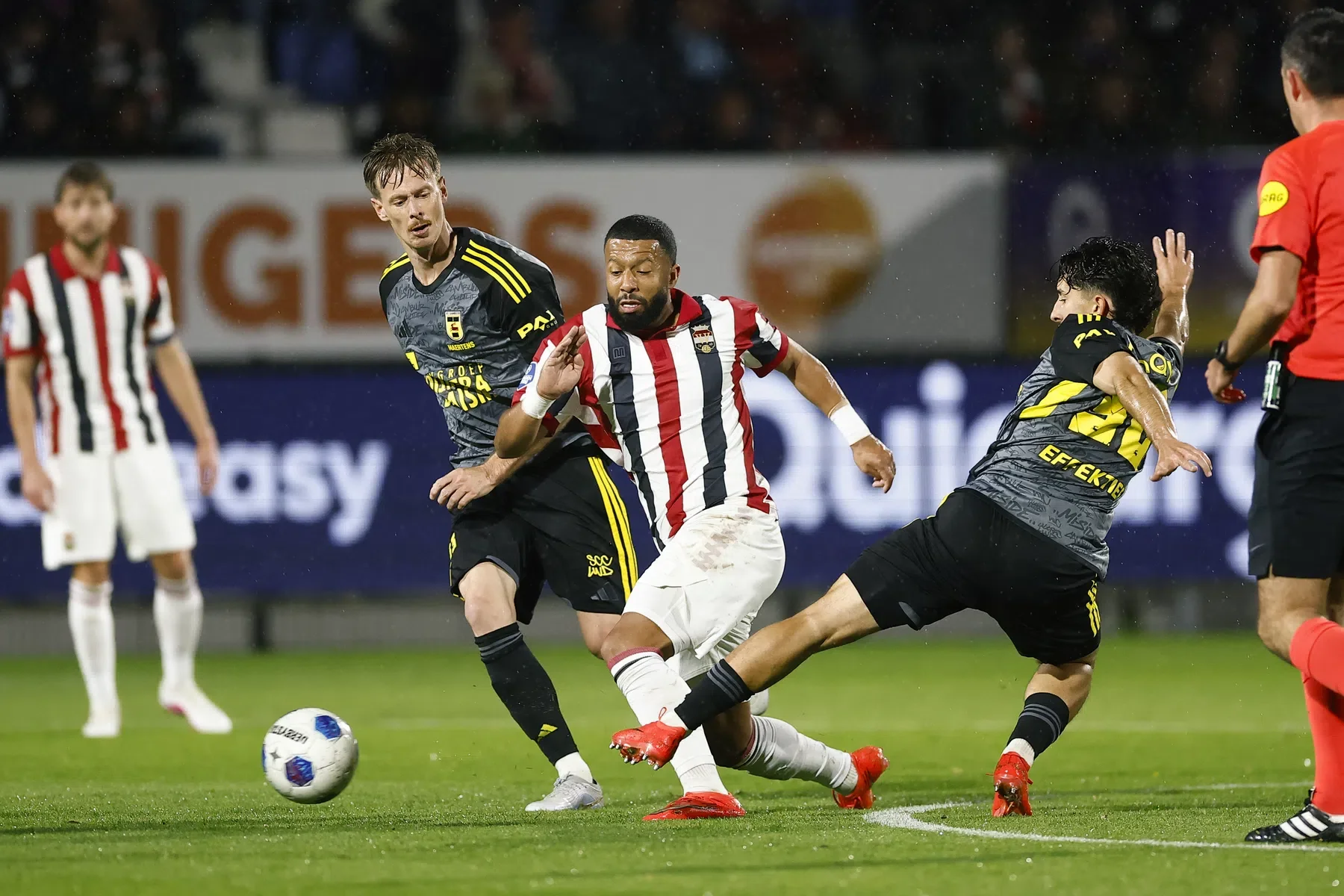
Cambuur took control before halftime
Willem II had earned promotion through last season’s play-offs, beating FC Volendam in the final. This campaign has been a sharp reversal, and the contrast makes the club’s present position harder to dismiss as a routine adjustment to a higher level. Poor results cost John Stegeman his job on Tuesday, and the club turned to Koster temporarily. A change of coach can reset attention and expectations, but it cannot instantly repair defensive habits or restore confidence. His first match offered little evidence of an immediate reset.
The hosts showed some early intent, but Cambuur struck in the ninth minute. Morgan Costarelli set up Nicolas Binder, who slipped the ball past Thomas Didillon-Hödl. The returning goalkeeper, back from injury, was beaten again four minutes later when Ilyes Hamache outran Willem II’s defence and lifted his finish over him. Two goals so quickly changed the terms of the match: Willem II had to chase, while Cambuur could play with the freedom that comes from an early advantage.
Ismael Baouf made it 3-0 in the 19th minute. Tonny Vilhena tried to clear the defender’s header off the line, but arrived too late; the VAR review confirmed the goal. Cambuur had built a commanding lead before the game was even 20 minutes old. That is the defining stretch of the match. A team already under pressure can struggle to recover from such a start, particularly when the goals arrive before a new interim coach has had time to establish a different approach.
Willem II’s problems continued after the break
Koster introduced three substitutes in search of a response, but the second half brought more of the same. Binder scored his second shortly before the hour, then Rafik El Arguioui made it 5-0 four minutes later after Didillon-Hödl lost control of the ball at his feet, leaving the midfielder an open goal. The sequence underlined the difference between making changes and changing a match: Willem II altered its personnel, yet the defensive errors continued. For a side trying to steady itself, conceding again so soon after the fourth goal made the task of restoring belief harder still.
Some supporters had already left when Anass Zarrouk pulled one back in the 82nd minute. Cambuur stayed on the front foot, and Jason Ceka added a sixth shortly before the final whistle. The late consolation offered Willem II little practical relief, while Cambuur’s response showed it had no interest in simply managing the margin. A six-goal return is emphatic; the willingness to keep attacking after the result was settled gave the afternoon an even more decisive feel.
The result sharpens the pressure on both sides
The win was Cambuur’s third of the season and extended its unbeaten run to six matches. Johan Plat’s side moved provisionally into tenth place. That progress matters because a sequence of unbeaten games can provide a team with a steadier platform than any single result, even one as striking as this. Cambuur still has work ahead, but the direction of travel is clearer than it was earlier in the campaign.
Willem II, meanwhile, remain last after a defeat that exposed how much work Koster faces in trying to steady the team. Two points leave little room for comfort, and the scale of this loss will make the next response important for the players as well as the interim coach. Here's the thing: a coaching change is often judged first by whether it stops the slide, and this opening result did the opposite. The deeper test will be whether Willem II can regain basic defensive control and turn intent into results. And this is the part most people overlook: a promoted side’s difficult start can become self-reinforcing, as each setback raises the pressure on the next performance.
This is more significant than it looks for Cambuur, whose unbeaten stretch suggests the result was part of a broader recovery rather than an isolated burst. If you're working in this space, the contrast is plain: one side is building momentum through a run of results, while the other has changed coaches and still faces the same urgent problem. For Willem II, there’s no easy way to read a 6-1 defeat. A response is needed.