Dejan Kulusevski is back in Sweden's training camp, and the knee that kept him out for 526 days still shapes how he thinks about his career.
The Tottenham midfielder, 26, is with the national team for this international break, his first time in the group in two years. Getting back there took a long road, and it's worth being clear about how long. A severe knee injury sustained in a defeat to Crystal Palace in May 2025 required surgery on his patella and the cartilage in his knee. When the first operation failed to fix the problem, a second procedure followed in the spring. Two operations on the same joint, close together, is not a minor setback for anyone, least of all a player in his mid-twenties. It's the kind of run that tests whether a career can recover at all, and that's why this call-up carries more weight than a routine selection.
The surgery he turned down
The more striking detail surfaced this week. Doctors had proposed a third operation over the summer, a full knee transplant. Kulusevski said no and chose to rehabilitate naturally, and that gamble looks like it's paying off. The reporting doesn't spell out the medical reasoning in detail, so I won't pretend to know more than it says. What it does make clear is that he was offered the most drastic option on the table and turned it down. Most people would find that decision hard to make, and I'd argue it's more significant than it looks at first glance.
He has made four substitute appearances for Tottenham in recent weeks. The aim is to make him a full member of Roberto de Zerbi's squad over the coming months, and staying fit is the central question. That said, four substitute outings is a modest return for a player who has been away this long. It shows he's available, not that he's fully back. (and this is the part most people overlook) Cautious managers often reintroduce returning players in short bursts, so limited minutes don't necessarily signal a problem. They also don't prove much yet.
Where his head was in the summer
The mood was far darker then. Walking up the stairs hurt, and for a stretch he was convinced his career was finished. Injuries of this kind often do more damage to the mind than the diagnosis suggests, because every small setback reads as confirmation. The uncertainty of not knowing whether the knee will hold is its own weight, and it's one that rarely shows up in the match reports. Kulusevski's account is candid about how far he sank.
"Things weren't getting any better. It was so painful just to walk upstairs," he said. "I started thinking, 'Well, if it's over, it's over.' I even had to tell my mom that I didn't think it was going to work out, just to prepare her and the rest of the family. But right around those days, things started to change."
Kulusevski's own account of the turn is simple. "And once things started to improve, I felt that I would make it through." Here's what stands out: the return of his confidence followed the physical progress, not the other way around. That sequence matters for anyone who has watched a player come back from a long injury and wondered why the performances lag behind the medical reports.
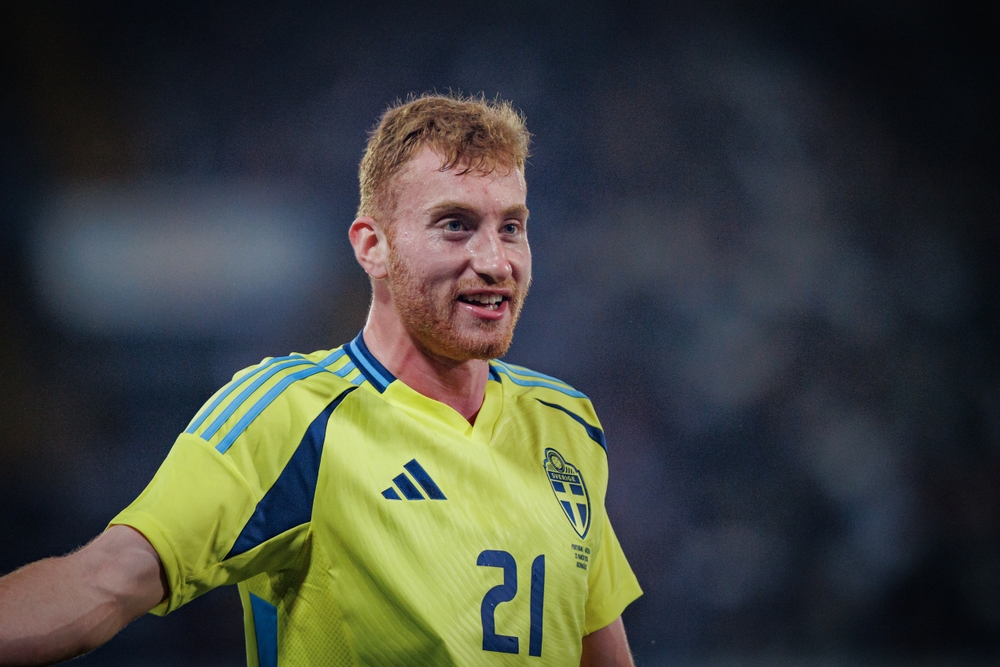
Not quite right yet
Kulusevski isn't pretending the knee is back to normal. Match days are fine, but some days still feel off. That's a more honest picture than the one a club usually offers, and it's the kind of detail that matters if you're tracking him as a fan or a fantasy manager. Joints that have been operated on repeatedly often behave unpredictably in the short term, and the gap between training and competition is where that unpredictability tends to show up.
"There are days when it doesn't feel like it used to, but once I'm out on the pitch, I don't even think about it. I'm really happy with how things are right now." The contrast he draws is telling. In the rhythm of a match, the knee fades into the background, but the everyday reminders stay with him. Athletes often describe this split, and it usually means the rehabilitation has done its job on the field even if life off it still feels fragile.
The lay-off also forced him to take stock. "Sometimes it felt like I'd been given an impossible task," he said. His answer was to move to an island and be with his family. "If I hadn't had my daughter, it would have been really tough. I would have been lost. But she was so much fun. I just thought, 'As long as I can be with her, I'll be happy.'" Strip away the football and that's a fairly ordinary conclusion, but after a stretch like this, ordinary is what a person reaches for. And yet it's easy to forget that an injury this long is also a family experience, not just a professional one.
What comes next
The next stretch is where this story gets tested. Tottenham needs him to be a regular option under de Zerbi, and the club's plans depend on his body holding up through a demanding schedule. If you're following the team closely, the useful thing to watch isn't the headline minutes but how he recovers after each appearance and whether his role expands without setbacks. That's the honest measure of the decision he made to skip the transplant.
Here's the thing about a bet like this: it only looks smart if the knee keeps working. Nobody gets to call the rehabilitation a success based on a few substitute appearances, and the sample is still small. What this means for you, as a reader, is that the next few months will tell you far more than any interview. The mark isn't going anywhere. The next few months will show whether the knee can carry the load Tottenham expects from him, and that will say more than any post-match comment.